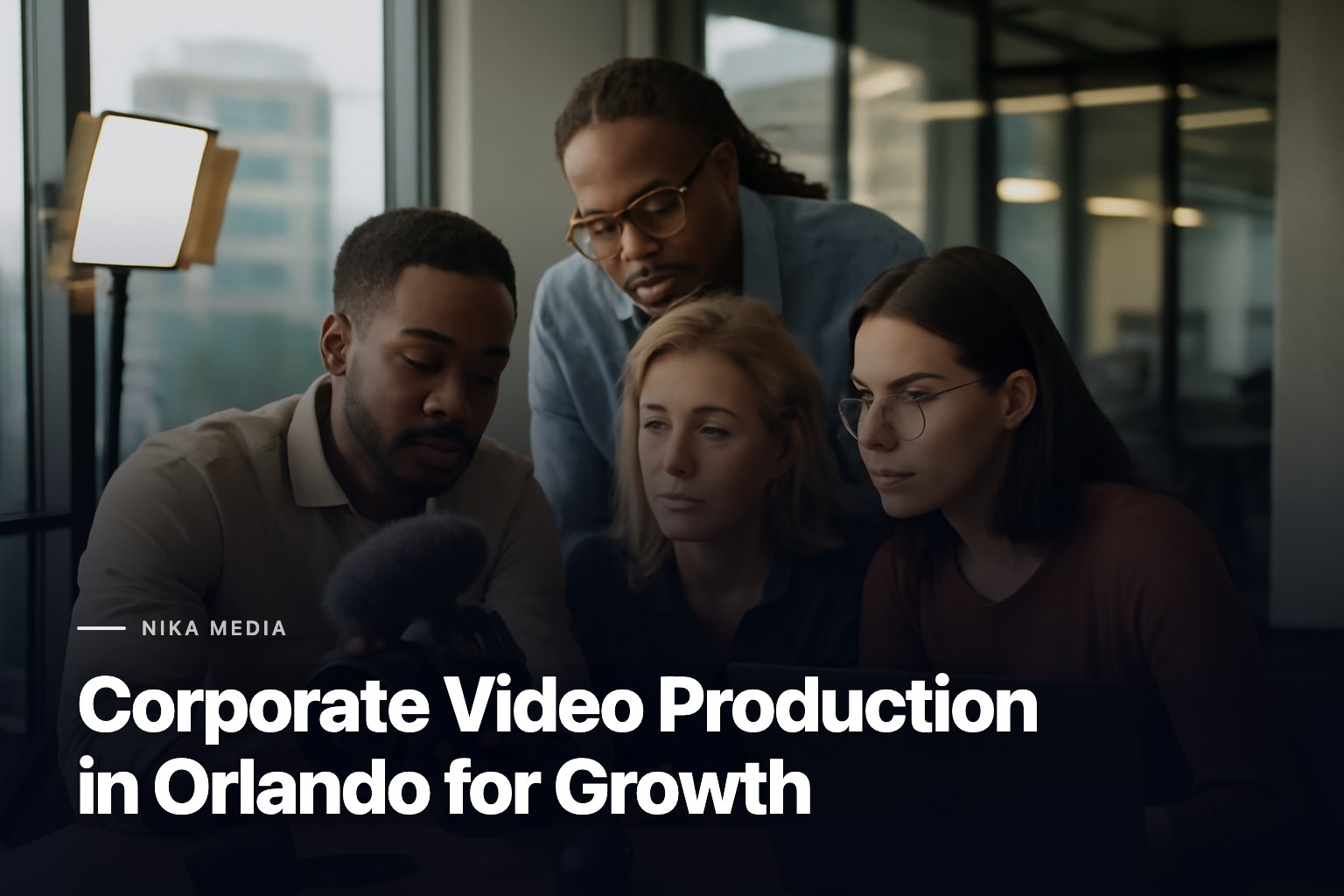
If your team keeps saying the next video will fix the funnel, but the last one never got approved, the problem is probably not the camera. With corporate video production in Orlando, the real challenge is usually aligning message, budget, and distribution before anyone steps into a studio.
That is where many businesses lose time. They book a shoot, collect good-looking footage, and then realize the video does not answer the questions buyers actually ask, does not fit the sales process, or was built for one platform only. If you are trying to turn attention into leads, the production decision matters as much as the creative idea.
What corporate video production in Orlando should actually solve
A solid video project should answer a business problem that already exists. Maybe prospects keep asking the same questions before booking a call. Maybe your sales team needs a better way to introduce the brand. Maybe your website looks polished, but it does not help visitors take the next step. That is where corporate video production in Orlando earns its place.
The best projects are built around a decision, not a decoration. A homepage video can reduce friction. A service explainer can clarify what you do and who it is for. A founder message can create trust before a sales call. Even short social clips work better when they are tied to a clear objective instead of being edited just to keep the feed active.
When a production company talks only about gear, lighting, and cinematic style, pause. Those things matter, but they do not decide whether the video helps your business. Ask what the video is supposed to change in the buyer journey. If the answer is vague, the project may look good and still underperform.
For businesses evaluating broader visibility strategies, it can also help to understand how a production team fits with marketing execution. Our guide to Video Marketing Agency in Orlando: What to Look For explains the difference between a vendor that delivers footage and a partner that supports growth.
Planning the message before the shoot
The strongest videos are usually decided long before the first frame is recorded. That planning stage should define who the video is for, what objection it needs to remove, and what action the viewer should take next. A script written around those three things will outperform a generic brand montage almost every time.
Think about the actual conversations your team has every day. What do prospects misunderstand? What do customers hesitate about? Which question keeps coming back in sales calls, DMs, or email replies? Those are often the raw material for a useful corporate video.
A good planning process usually includes:
Audience and intent
A message for investors is not the same as a message for local service buyers, and neither of those is the same as a recruiting video. If the audience changes, the language, pacing, and proof points should change too. One of the fastest ways to waste a production budget is to make a single video try to speak to everyone.
Script and structure
A script should feel natural, but it still needs structure. Open with the problem or need, move into the solution, and end with a clear next step. If the video is meant for ads, keep the payoff earlier. If it is meant for a website, give enough context so the viewer does not have to guess what the company does.
Asset planning
Do not think only in terms of one finished video. One shoot can produce a main brand piece, several short edits, and supporting clips for landing pages or email follow-up. That is where production becomes more efficient. It is also where a team with an organized workflow saves you from repeated shoots and uneven messaging.
If your company is refining its broader digital presence, the decision is often interconnected with other channels. This is why some teams review a Digital Marketing Agency in Orlando: A Complete Guide to Making the Right Decision before choosing a video partner. The goal is not to add more vendors; it is to avoid disconnected work.
Signs of a production partner that understands business goals
A polished reel is not enough. The right team should ask questions that reveal how your business works, how leads come in, and where video will be used. If they ask about platforms, deadlines, and message before they ask about camera specs, that is a good sign.
You want a partner who can translate business context into creative choices. For example, a service company may need a tighter, more direct structure than a lifestyle brand. A local Orlando business may benefit from grounded, familiar visuals, while a founder-led company may need a more personal tone. The production approach should follow the strategy, not the other way around.
What to review before you sign
Look closely at the proposal, not just the sample work. Confirm what is included in concept development, scripting, filming hours, revisions, and final deliverables. Ask who owns the footage, whether raw files are available, and how approvals are managed. These details matter because they shape how usable the content will be after the project ends.
Also pay attention to how the team discusses performance. They do not need to promise results they cannot control, but they should understand how a video supports conversion, sales, or retention. If they only talk about aesthetics, they may not be thinking about your business the way you are.
For teams building a larger content system, it can help to compare production expectations with marketing expectations. A Social Media Company: A Complete Guide to Making the Right Decision can give useful context on how video content should travel once it leaves the studio.
MESSAGE OVER CAMERA
Orlando video works only when strategy leads
Corporate video production in Orlando is most effective when the message, budget, and distribution plan are aligned before filming starts. Otherwise, attractive footage can still miss the buyer journey.
Make Video Work
The article centers on four business-first checks: goal, audience, workflow, and distribution. When these are set early, video is more likely to support leads, sales, and follow-up across channels.
What changes the outcome
Before
Common mistake
- Camera first: Start with gear and visuals.
- One use: Build for a single platform only.
- Vague scope: Hide revisions, usage, or deliverables.
- Aesthetics only: Talk style, not buyer action.
After
Better practice
- Goal first: Start with the business objective.
- Multi-use: Plan for web, ads, social, sales.
- Clear scope: Confirm scripting, filming, edits, rights.
- Conversion ready: Tie content to the buyer journey.
How the process should work
Strong corporate video projects are planned before the first frame is recorded.
Define the message
Identify the audience, objections, and next action the video should support.
Plan the shoot
Choose script, structure, assets, studio or location, and workflow before filming.
Distribute the content
Create versions for websites, ads, social, and follow-up so one shoot works harder.
What to do next
Set one goal
Choose the business problem the video should solve before talking about shots.
Map your audience
Define who the video is for and what they need to believe.
Review the scope
Confirm revisions, deliverables, usage rights, and who owns the footage.
Plan distribution
Decide where the video will live after export and how it will be used.
Make it usable
Without a clear strategy, a corporate video may look polished and still underperform. With the right plan, it can support leads, reduce friction, and make every shoot more valuable for your business and brand.
Studio, location, and workflow decisions that change the outcome
Not every project needs a location shoot. Some do better in a controlled studio, especially when the message must stay tight and the visual quality needs to be consistent across multiple assets. A professional studio in Orlando can simplify sound, lighting, branding, and schedule coordination, which matters when a team has limited time or multiple stakeholders.
Location shoots can still be valuable when the environment adds credibility. A warehouse, office, clinic, showroom, or event space can give a video texture that a studio cannot fake. The decision should come from the story. If the setting helps prove the service, use it. If it distracts from the message, keep the environment simple.
A good workflow also reduces pressure on the day of filming. That means talent is prepared, scripts are approved, and the shot list is realistic. It also means someone is thinking ahead about cutdowns, captions, thumbnails, and export formats. A beautiful shoot can still fail if the post-production plan is an afterthought.
NIKA MEDIA works with businesses and personal brands in Orlando that want content to do more than sit on a website. In many cases, the value is not just the finished piece, but the system around it: planning, filming, editing, and making the content usable across channels.
How video fits into lead generation and follow-up
A video rarely closes a sale by itself. What it does well is reduce uncertainty before and after a conversation. That is why the smartest video projects are tied to lead generation systems, landing pages, appointment booking flows, and follow-up sequences.
Think about the point where your sales process slows down. If prospects need repeated explanations, a short explainer can help. If people book calls but arrive unprepared, a pre-call video can warm them up. If you are trying to re-engage old leads, a direct message video can be more persuasive than another generic email.
The same logic applies to support and client communication. A short onboarding video can answer recurring questions. A process video can reduce back-and-forth with new customers. A brand story can make a service easier to trust before the first purchase. The strongest corporate video production in Orlando projects are often the ones that think beyond the first view.
If you are exploring a more automated customer journey, video can sit alongside other systems rather than replace them. For example, a business may use a video in ads, then route interested leads into scheduled follow-up or message-based support. That kind of structure is usually more useful than publishing content with no next step.
For some businesses, the right next move is also operational. If a team is testing a new offer or needs space to record consistent content, a professional studio rental in Orlando can keep production cleaner and more repeatable. If the goal is to scale conversations, a system that handles replies and calls around the clock may matter just as much as the footage itself.
Common mistakes that make corporate videos underperform
The most expensive mistake is not always overspending. It is creating a video that cannot be reused, cannot be measured, or cannot support the sales process. A stylish edit without a clear use case becomes a nice asset that quietly disappears after launch.
Another common issue is trying to say too much. If the video covers every service, every audience, and every differentiator, viewers often remember nothing. One message per asset is usually a better standard. If you need multiple messages, make multiple videos.
A few warning signs are easy to spot:
- The brief is mostly about visuals and barely mentions the buyer.
- The script changes too late, after filming is already scheduled.
- No one has decided where the video will live after export.
- Revision limits, music licensing, or usage terms are unclear.
- The team cannot explain how the content will support conversion.
There is also a technical side to watch. Compressing the wrong way, using the wrong aspect ratio, or forgetting caption-friendly edits can limit distribution. If a piece is meant for paid ads or short-form social, it should be shot and edited with that in mind, not adapted awkwardly later.
When production is tied to paid traffic, platform policies and formatting matter too. Meta’s Business Help Center and Google’s Ads Help are useful references when your video has to meet platform requirements and not just look good in a portfolio.
Choosing a partner in Orlando without overcomplicating it
If you are comparing teams, simplify the decision around three questions: do they understand your business model, can they make the content usable after delivery, and are they clear about process? That framing keeps the conversation grounded.
You do not need the loudest pitch. You need a team that can translate ideas into assets your business will actually use. Some companies are looking for a campaign video. Others need a library of short clips, founder content, or sales support material. The right partner should help you define the format before selling you the shoot.
That is also why local fit matters. Working with a team based in Orlando can make reviews faster, location planning easier, and studio access more practical. It can also help with content that feels relevant to the market you serve, especially if your audience wants a business that understands the region rather than one producing generic material from afar.
NIKA MEDIA often comes into the conversation when a business wants a video strategy connected to lead flow, automation, and content that can support sales over time. If that is the real goal, the right creative choice is usually the one that fits the system, not the one that just looks impressive in isolation.
FAQ
How long does a corporate video project usually take?
It depends on the scope, approvals, and how many deliverables are included. A simple piece with one filming day and light editing moves faster than a project with multiple versions, animation, or stakeholder review cycles.
Should I use a studio or film on location?
Use a studio when you need control, consistency, and a clean brand presentation. Choose a location when the setting adds credibility or helps explain the service. The right answer depends on what the viewer needs to believe.
What should I prepare before contacting a production team?
Have a clear goal, a rough audience description, and an idea of where the video will be used. If you already know the most common customer questions, even better. That information saves time and makes the first concept more useful.
Can one video be used across website, ads, and social media?
Yes, but usually not in the exact same form. A strong shoot can produce a main version plus shorter edits adapted for different channels. That is more effective than forcing one export to do every job.
What should I avoid when hiring a video partner?
Avoid unclear scope, weak planning, and teams that focus only on visual style. If the proposal does not explain what happens before, during, and after filming, the project may become harder to manage than it should be.
If you are ready to build video that supports leads instead of just filling a feed, talk to NIKA MEDIA about a production plan that matches your sales process, your brand, and the way your audience actually makes decisions. A good first conversation should clarify what to film, how to reuse it, and where the content will help most.
If you want content that works across your website, sales follow-up, and campaigns, we can help you shape the right format before the shoot starts. Reach out and we will map the video structure to the outcome you need most.